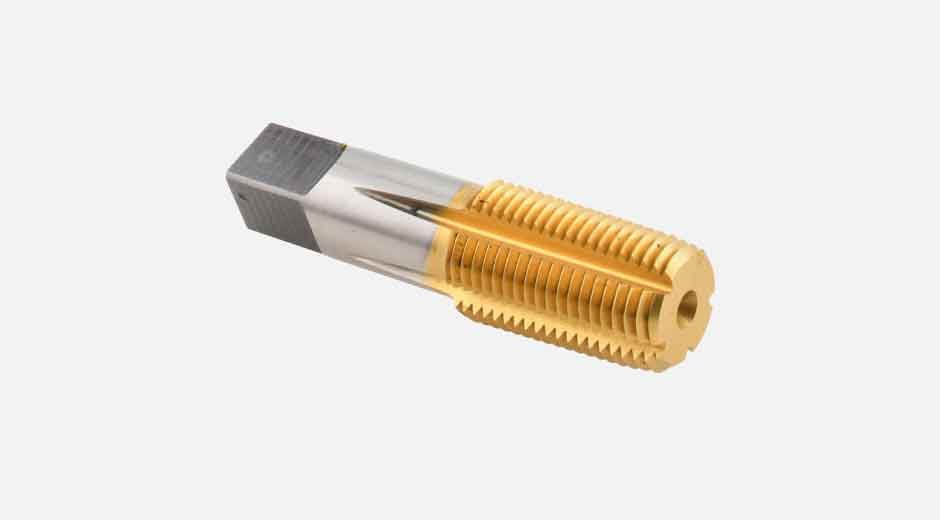
A procurement decision on something as small as a tap may look routine, but the difference between a mediocre tool and a high-grade one eventually shows up in thread leakage, machine downtime, torque spikes, tool breakage, and repair tickets.
Buying teams compare prices and delivery schedules. But what’s more important is going into the technical details of how a tap is built.
Below is a clear technical breakdown of the elements that define a high-quality pipe tap.
Table of Contents
ToggleMechanical loads to shape tap performance
When pipe taps enter material, they face a mix of torsional, radial, and axial loads. These forces rise quickly as the thread deepens. High-quality taps are not defined by appearance but by how well they handle this load progression.
A procurement team should ask:
- How does the tap respond to sudden torque spikes
- Does the design support uniform load distribution across all flutes
- Is the core strength sufficient for pressure-tight pipe threads
A tap built without regard for these mechanical loads will twist, bind, or fracture early. A well-engineered tap stays stable under pressure, cuts smoothly, and produces threads that maintain seal integrity.
Geometry features influencing thread accuracy
Geometry is the heart of thread quality. Even small shifts in geometry parameters change how the tap enters, cuts, and exits the material.
Critical areas to evaluate:
- Flute configuration controlling chip evacuation
- Rake angle influences penetration and cutting smoothness
- Relief angles supporting cooler cutting and reduced friction
- Thread form accuracy producing clean, pressure-holding profiles
For procurement teams, this means choosing vendors who control micro-geometry, not just macro dimensions. Accurate geometry is what delivers threads that seal correctly under pressure once the fitting goes into service.
Material properties behind industrial-grade durability
Two taps can share the same design and still perform very differently due to substrate choices. Material strength decides how well the tap survives repeated high-stress cycles.
Key material considerations:
- Hardness stability across the tap length
- Resistance to micro-cracking under torsion
- Purity of steel influences edge retention
- Heat-treatment uniformity ensures predictable wear
Industrial-grade durability comes from a combination of steel quality and thermal processing. If these two are inconsistent, lifespan shrinks, and failure points become random, creating unpredictable costs on the shop floor.
Coating choices for difficult metals
Coatings extend tool life, but only when paired correctly with the application and base material. Procurement teams often see coating names and assume improved performance across the board. In practice, coating behavior differs significantly.
Pipe tapping involves materials that generate heat quickly. A coating matched to the specific alloy or steel grade used in your plant directly reduces wear and maintains thread consistency. However, wrong coating choices increase torque and degrade thread quality.
Tolerances defining premium cutting consistency
Pipe threads require specific dimensions to create a reliable seal. Tolerance drift is one of the biggest sources of tap-related failures.
Important tolerance checkpoints:
- Pitch deviation
- Thread symmetry
- Concentricity between the shank and the cutting section
- Minor diameter precision
High-quality taps maintain tight tolerances across full production batches, not just in one inspected sample. Procurement teams should verify batch-level repeatability because inconsistent tolerances lead to inconsistent sealing performance after installation.
Wear indicators signaling tool quality
Wear patterns provide insight into tap construction and coating performance. For example, a poorly engineered tap doesn’t wear uniformly.
What wear reveals:
- Uneven edge rounding suggests a geometry imbalance
- Burn marks point to high friction or poor coating
- Chipping indicates substrate brittleness or wrong heat treatment
- Abrasive patterns show incorrect rake or relief angles
Monitoring wear gives procurement teams a real basis for comparing competing suppliers. A tap with slow, uniform wear reduces tool changes and lowers the cost of each threaded part produced.
Conclusion
A high-quality pipe tap is not defined by appearance or catalog descriptions. It is defined by how well its design, material strength, geometry, coating, tolerances, and inspection controls work together to create reliable, pressure-holding pipe threads with minimal variation. For procurement teams, this breakdown becomes a practical checklist. Each factor directly affects tool life, machine stability, sealing performance, and long-term cost on the floor.
Better buying decisions come from understanding why these technical elements matter. When a supplier can explain each aspect clearly and provide data to back it up, the taps you purchase will behave consistently, reduce maintenance incidents, and support higher production output without surprise failures. This is the real measure of a high-quality pipe tap in an industrial environment.