
In Singapore, digital devices are woven into almost every part of daily life. A smartphone is used for communication, transport applications, banking access, digital payments, customer messaging, and identity verification. A laptop often carries school projects, office documents, presentations, remote-work tools, and personal files. When one of these devices suddenly stops working, the disruption is not usually small. A charging fault can cut off access to maps and payment apps. A damaged display can interrupt customer communication. A weak battery can shorten an entire workday. This is why reliable repair support still matters in a city where people depend so heavily on connected technology.
For residents in western Singapore, this often becomes a local practical issue rather than an abstract one. People in Jurong West, Boon Lay, Lakeside, Pioneer, and the surrounding districts usually want a repair provider that feels accessible, technically capable, and consistent. Convenience matters because no one wants to travel across the island just to diagnose a device fault. Trust matters because phones and laptops hold important data, business access, and personal information. When customers search for a repair option, they are usually looking for a provider that can inspect the hardware properly, explain the likely issue clearly, and recommend a repair path that makes sense.
Modern devices are also more complicated than many users first assume. A phone that stops charging may appear to need only a new connector, yet the real cause could involve battery wear, internal corrosion, damaged charging pathways, or a deeper board-level problem. A MacBook that shuts down unexpectedly may seem to have a battery issue while the real fault sits in the power-management system, charging path, or logic board. Good repair work therefore starts with diagnosis rather than assumption. That difference between guesswork and careful testing often determines whether the repair is temporary or dependable.
Why Proper Diagnosis Comes Before Any Real Repair
One of the clearest differences between dependable repair work and careless part swapping is the diagnostic process. A visible symptom is not always the true cause of a fault. A screen issue might also involve touch failure or connector damage. A battery complaint may actually reflect unstable charging behavior. A phone that appears completely dead may still have recoverable components if the internal power pathway is tested correctly. The same principle applies to laptops: a no-power condition can be caused by the charger, the battery, the board, or an interaction between several components rather than one obvious failure.
That is why experienced technicians usually begin by observing how the device behaves under controlled testing rather than immediately replacing the first component that appears suspicious. They may review charging response, battery condition, display behavior, power draw, temperature changes, startup patterns, or connector stability. On laptops, they may also assess keyboard response, display output, fan activity, and charger recognition before opening the machine. These steps narrow the possible causes and help the technician decide whether the device needs a simple part replacement, a more advanced repair, or a deeper board-level inspection.
For customers, the value of diagnostics is practical rather than theoretical. Proper testing reduces unnecessary replacement of working parts, improves the chance that the actual issue is identified the first time, and gives the customer a clearer explanation of what has happened. In a repair setting, that clarity matters. People usually feel more confident when they understand whether a problem comes from ordinary wear, accidental damage, liquid exposure, or a more advanced electrical fault. Diagnosis is not an extra step added for effect. It is the foundation that makes the rest of the repair process worthwhile.
Hands-On Repair Work and the Value of Repeated Experience
Repair skill develops through repetition as much as technical theory. A technician who has opened, inspected, and repaired a large number of devices develops a stronger sense of how different components fail over time. Battery wear, damaged display layers, connector fatigue, charging-port looseness, liquid exposure, and board instability all leave different clues. Repeated exposure to these clues helps experienced repair professionals make better judgments and avoid mistakes that can happen when symptoms are interpreted too quickly.
In practical terms, modern repair work also depends on specialized tools. Precision screwdrivers, magnification, soldering equipment, thermal tools, multimeters, and bench power supplies all contribute to more accurate diagnosis and safer repair handling. These tools do not replace judgment, but they allow good judgment to be applied more effectively. Smartphones and laptops now use compact board layouts, tightly fitted connectors, and sealed designs that can be difficult to inspect without the right equipment.
Bench-level inspection matters because not every issue can be detected through software checks alone. Internal corrosion, fractured solder joints, worn connectors, and damaged component pathways may only become visible once the device is opened and inspected under proper lighting and magnification. As hardware becomes smaller and more integrated, careful inspection becomes more important rather than less. The more compact the device, the easier it is for a hidden fault to mimic a simpler problem from the outside.
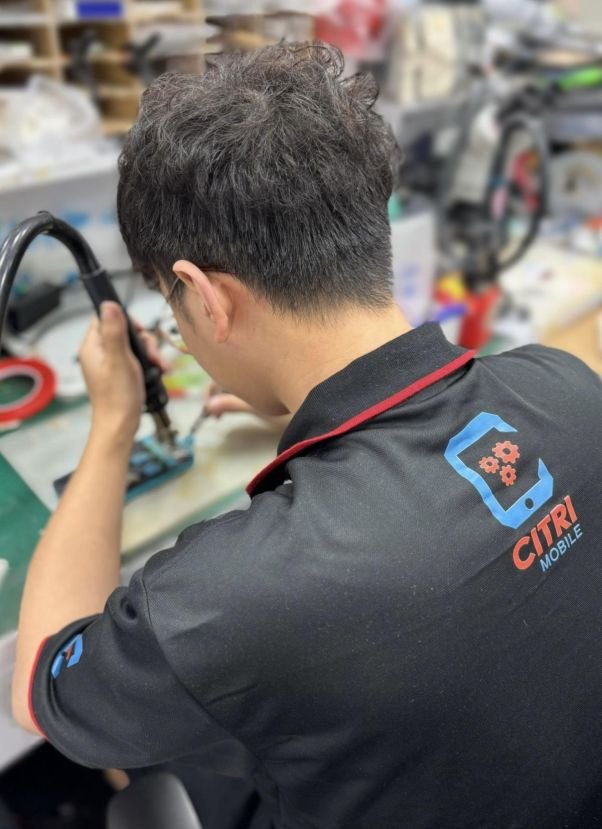
Technician performing detailed smartphone motherboard diagnostics at a Citri Mobile workstation in Singapore, illustrating the hands-on repair environment behind modern phone and laptop inspection work.
Local Repair Convenience in Jurong
For many residents in western Singapore, the search for support starts locally. People looking for phone repair in Jurong are usually not just trying to find the closest counter. They are often trying to find a repair environment that can inspect the device carefully, explain the issue clearly, and offer practical support without unnecessary uncertainty. That becomes especially important when the phone involved is a primary device used for communication, maps, work chats, transport tools, and payment access.
A nearby repair point can shorten the gap between a device failing and the diagnosis beginning. Instead of waiting too long to understand what has happened, customers can bring the device in earlier, receive a clearer assessment, and decide on the most suitable next step with less guesswork. This matters in ordinary real-world ways. A student may need a phone back for school coordination and transport. A worker may depend on their device for scheduling and communication. A business owner may rely on it for customer messaging, orders, or payment confirmations.
Local presence also affects customer confidence. A visible Jurong outlet feels more accountable than an unfamiliar one-off arrangement with no clear service footprint. When people know that the provider operates as part of a broader network rather than a temporary counter, it becomes easier to trust the process, especially when the device involved contains important accounts, personal photos, or work access. In this sense, local convenience and service credibility often work together rather than separately.
Common Smartphone Problems Seen in Daily Repair Work
Screen damage remains one of the most common repair categories across smartphones. A drop onto a hard surface can crack the outer glass, damage the touch layer, or affect the display underneath. Sometimes the phone still lights up but no longer responds properly. In other cases, the display becomes blank, flickers, shows lines, or behaves inconsistently even though the phone is technically still on. These differences matter because they point to different repair priorities and help determine whether the issue lies in the front assembly alone or in a deeper circuit path.
Battery degradation is another frequent issue. Over time, lithium-ion batteries lose capacity and may begin draining too quickly, overheating, swelling, or shutting the phone down unexpectedly. For many users, this changes the entire practicality of the device. A phone that cannot hold charge for long is not merely inconvenient; it becomes unreliable during travel, work, and communication. Proper battery replacement often restores usability, but diagnosis still matters because battery-related symptoms can overlap with charging instability or internal power faults.
Charging issues also remain widespread. Dust buildup, wear from repeated cable use, accidental force, and liquid exposure can all affect the charging port or nearby circuitry. From a user’s perspective, the fault may look like slow charging, cable sensitivity, or complete failure to charge. From a repair perspective, the cause can be more specific. It could involve the connector, the battery, an internal flex cable, or a board-level charging problem. This is why even apparently simple phone repairs benefit from a proper inspection process instead of quick assumptions.
Camera, speaker, microphone, and button issues are also part of everyday repair work. These faults may be caused by impact damage, internal contamination, component wear, or liquid exposure. Although they are less discussed than screens or batteries, they still affect daily usability. A phone with a damaged microphone may interrupt work calls. A speaker problem can make voice notes or media difficult to use. These smaller hardware issues still benefit from the same repair principles: inspect carefully, diagnose accurately, and replace only what is genuinely needed.
MacBook and Laptop Repair Challenges
Laptop repairs can involve additional layers of complexity because systems such as MacBooks integrate displays, batteries, charging systems, cooling assemblies, keyboards, trackpads, and logic boards within compact designs. Users researching MacBook repair in Jurong are often dealing with issues such as sudden shutdowns, charging instability, display faults, weak battery life, or startup failures that require more than a quick visual check.
A laptop that does not power on may involve several possible causes. The battery may be degraded. The charging path may be damaged. The adapter recognition process may be failing. In more serious cases, the underlying issue may sit on the logic board. Without a structured diagnostic approach, these problems can easily be confused with one another. That confusion can lead to the wrong part being replaced while the real fault remains unresolved.
Display faults on laptops are equally varied. The problem may be a cracked panel, an intermittent backlight issue, a damaged connector, or a graphics-related fault that affects what appears on the screen. Keyboard problems may reflect liquid exposure, connector instability, or wear across repeated daily use. Trackpad faults may involve both physical and electrical causes. This is why laptop repair often feels more involved than phone repair: the machine contains more interconnected systems, and those systems must be assessed together rather than in isolation.
For customers, the practical concern is usually simple: they need the laptop back in dependable working condition. A student may rely on it for assignments and research. A professional may need access to documents, presentations, and remote meetings. A business owner may use it for operations, invoicing, or communications. In all of these cases, accurate diagnosis matters because the laptop is not just a device being fixed; it is a working tool being restored.
Why Data, Communication, and Trust Matter During Repair
Repair decisions are not only technical. They also involve trust. Phones and laptops often contain photographs, chat histories, work credentials, customer records, and access to online services. Most customers do not approach repair as if they were simply replacing a household object. They approach it as handing over a device that carries parts of their daily life. That is one reason clear communication from the repair side matters so much. Customers want to know what is likely wrong, what repair path is being proposed, and whether the process feels careful and accountable.
Good communication also reduces unnecessary anxiety. Many people describe problems in non-technical language: the phone got hot, the laptop suddenly went black, the charger only works at one angle, or the battery started dropping unusually fast. A skilled technician must translate those symptoms into a structured diagnostic process and then explain the findings back in a way the customer can understand. This is often where experienced repair providers stand out. The explanation feels clearer, the assessment feels more grounded, and the repair recommendation feels more credible.
Independent Repair Networks and Service Breadth Across Singapore
Independent repair providers now often support more than one device category because households and businesses depend on several types of hardware at once. One customer may use an iPhone for communication, an iPad for travel or personal use, and a MacBook for work. Another may rely on a Samsung phone for daily messaging while using a laptop for meetings, projects, or school. This means repair environments that regularly see multiple device types build practical familiarity with a wider set of failure patterns over time.
Citri Mobile supports device repair services in Singapore through a broader network that includes Citri Mobile Phone Repair in Chinatown together with C3 Smart Repair by Citri Mobile outlets in Tampines, Jurong West, and Yishun. For customers, that wider structure creates a clearer service footprint. The provider does not appear as a single isolated counter; it appears as a repair network supporting multiple districts and multiple device categories. That broader presence can make a local outlet feel more recognizable and more established.
The multi-device aspect matters because customers often return over time with different issues on different devices. Someone may first visit for a phone battery problem and later come back for a laptop charging fault or display issue. When one network can support several devices across different locations, the customer relationship becomes less transactional and more practical. From a local perspective, the provider becomes easier to recognize as part of Singapore’s wider repair landscape rather than a one-dimensional service point.
Extending the Lifespan of Everyday Technology
Repair services also play a wider role in extending the lifespan of modern electronics. Many devices are replaced prematurely when the underlying problems could actually be repaired. Screen damage, battery wear, charging faults, and connector problems often make devices feel unusable long before the rest of the hardware has reached the end of its practical life. When those issues are corrected properly, the device can continue operating effectively rather than being discarded early.
For users, that means fewer interruptions and more practical value from technology they already own. A repaired phone restores communication, transport tools, payments, and messaging. A repaired laptop restores access to work files, school documents, and productivity software. In this sense, repair is not simply about fixing hardware. It is about restoring access to everyday digital life. That broader practical value is one reason repair continues to matter even as devices become more advanced and more tightly integrated.
Conclusion
Reliable phone and laptop repair still matters because digital devices are too important to everyday life to be handled carelessly. Good repair work depends on careful diagnostics, practical experience, proper equipment, and clear communication rather than fast assumptions or unnecessary part changes. That is especially true when devices hold access to work, communication, payments, and personal information.
For people in Jurong and the wider west of Singapore, nearby support is valuable not only because it is convenient, but because it shortens the path from device failure to clear diagnosis. In practical terms, the strongest repair options are usually the ones that combine local accessibility, multi-device capability, and a visible service presence across Singapore. When those elements come together, repair becomes less uncertain and more useful for the people who depend on their devices every day.