
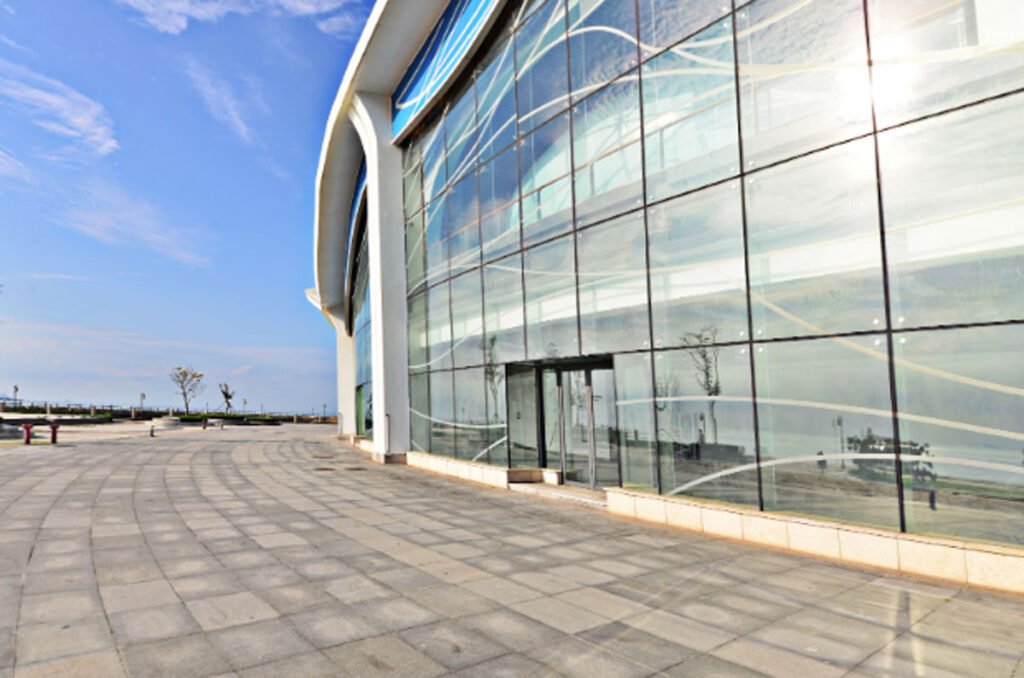
Public buildings are designed to serve large numbers of people every day. Airports, shopping centers, hospitals, schools, and transportation hubs must handle constant movement while maintaining safety, durability, and comfort. In such environments, construction materials are expected to perform reliably under pressure and frequent use.
Glass is widely used in public spaces to create open, welcoming environments filled with natural light. However, standard glass is often not suitable for high-traffic areas where safety risks are higher. Laminated glass has become a preferred solution in public environments because it combines transparency with strength and protective performance.
Table of Contents
ToggleWhy Public Projects Require a Reliable Laminated Glass Manufacturer
For public buildings, selecting an experienced Laminated Glass manufacturer is a critical decision. Public environments demand materials that meet strict safety regulations and perform consistently under heavy usage. Laminated glass must be manufactured with precision to ensure it can withstand impact, pressure, and long-term wear.
The lamination process involves bonding glass layers with a durable interlayer under controlled heat and pressure. This process ensures that even if the glass breaks, it remains intact rather than shattering. In public spaces, where safety liabilities are high, this performance is essential.
Professional manufacturers follow strict quality control procedures to ensure laminated glass meets international safety standards and project specifications.
Safety as a Priority in High-Traffic Areas
Safety is the primary concern in public environments. Accidental impacts, crowd movement, and unexpected stress can all lead to glass damage. Laminated glass is designed to reduce risks associated with breakage.
When laminated glass is damaged, the interlayer holds the fragments together. This prevents sharp pieces from falling and minimizes the risk of injury. Because of this behavior, laminated glass is widely used in:
- Airports and railway stations
- Shopping malls and retail centers
- Hospitals and healthcare facilities
- Educational institutions
By improving occupant safety, laminated glass helps public buildings meet regulatory and insurance requirements.
Durability Under Continuous Use
Public buildings experience constant wear and tear. Doors, partitions, railings, and façades are exposed to frequent contact and environmental stress. Laminated glass is well suited for these conditions due to its layered structure and enhanced strength.
Its durability reduces the likelihood of sudden failure and helps maintain structural integrity over time. This makes laminated glass a cost-effective choice for public projects that require long service life and minimal maintenance.
Durable materials reduce operational disruptions and long-term repair expenses for facility managers.
Noise Control in Busy Public Spaces
Noise is a major challenge in high-traffic public environments. Crowds, announcements, and equipment can create uncomfortable sound levels. Laminated glass helps address this issue by improving acoustic performance.
The interlayer absorbs sound vibrations, reducing noise transmission between areas. This makes laminated glass valuable for:
- Airport terminals
- Hospital corridors
- Libraries and study areas
- Office buildings within public complexes
Improved acoustic comfort enhances user experience and supports functional space planning.
Mid-Article Focus: Consistent Supply for Large-Scale Projects
Public construction projects often involve large quantities of glass installed across multiple phases. Consistency in quality, thickness, and appearance is essential. Partnering with a dependable Laminated Glass manufacturer helps ensure uniform results throughout the project.
Consistent manufacturing simplifies installation, reduces on-site adjustments, and prevents visual inconsistencies. Reliable supply also helps keep large public projects on schedule and within budget.
Manufacturers with stable production capacity are better equipped to support long-term and multi-phase developments.
Supporting Transparency Without Compromising Security
Public buildings often aim to appear open and transparent while maintaining security. Laminated glass supports this balance by offering clear visibility combined with impact resistance.
It is commonly used in:
- Building entrances
- Ticketing areas
- Observation zones
- Security partitions
Laminated glass allows designers to maintain openness while meeting safety and security requirements.
Resistance to Environmental and Accidental Impact
Public environments are exposed to accidental impacts from carts, equipment, or large crowds. Laminated glass is designed to handle these situations better than standard glass.
Its layered construction helps distribute impact forces, reducing the risk of complete failure. Even when damaged, laminated glass continues to act as a barrier, protecting occupants and surrounding areas.
This performance is particularly valuable in transportation hubs and public gathering spaces.
UV Protection and Interior Preservation
Large glass surfaces in public buildings allow significant sunlight exposure. Laminated glass blocks a high percentage of harmful UV rays, protecting interior finishes from fading and deterioration.
This helps preserve:
- Flooring and wall finishes
- Furniture and seating
- Signage and displays
UV protection extends the life of interior materials, reducing maintenance and replacement costs.
Design Flexibility for Public Architecture
Public architecture often requires bold designs and large glass surfaces. Laminated glass supports creative freedom while meeting safety standards.
Customization options may include:
- Different thickness combinations
- Tinted or decorative interlayers
- Acoustic-enhanced laminations
- Security-focused configurations
These options allow architects to tailor solutions to specific public space requirements.
Professional Manufacturing and Public Project Confidence
Public projects require dependable partners who understand regulatory compliance and safety expectations. mannleecw.com reflects a professional approach to laminated glass production, focusing on quality control, consistency, and performance suitable for public environments.
Experienced manufacturers provide technical support, documentation, and reliable delivery, helping public projects proceed smoothly from design to installation.
Future Role of Laminated Glass in Public Infrastructure
As urban populations grow, public infrastructure will continue to expand. Laminated glass is expected to play an increasing role in creating safe, durable, and comfortable public spaces.
Advancements in interlayer technology and acoustic performance will further enhance laminated glass applications in transportation, healthcare, and civic buildings.
Conclusion
Laminated glass has become an essential material for high-traffic public environments where safety, durability, and comfort are critical. Its ability to reduce injury risk, control noise, and withstand continuous use makes it ideal for public architecture.
By selecting the right manufacturing partner, project teams can ensure laminated glass delivers consistent performance across large-scale public developments. As public spaces evolve, laminated glass will remain a trusted solution for safe and efficient design.