
This article isn’t about abstract theory. It’s about understanding the practical insights embedded within this framework and learning how to apply them in your specific context—whether you’re building technology infrastructure, making critical business decisions, or developing creative projects. By the end, you’ll grasp not just what Vyxarind Qylorith is, but why it matters for your future success.
Understanding Vyxarind Qylorith: Beyond Definitions
What Is Vyxarind Qylorith?
Defining Vyxarind Qylorith requires stepping beyond conventional categories. It’s not simply a technology, a business methodology, or a creative technique—though it contains elements of all three. At its core, Vyxarind Qylorith is a systemic framework for managing complexity through modular integration and adaptive design.
Think of it this way. Traditional approaches often force you to choose: optimize for efficiency or maintain flexibility. Prioritize innovation or ensure stability. Embrace change or preserve structure. Vyxarind Qylorith rejects these false choices. Instead, it demonstrates how to achieve seemingly contradictory goals simultaneously through intelligent system design.
The framework emerged from decades of research across multiple disciplines—systems theory, organizational psychology, software architecture, creative design, and strategic management. What researchers discovered was a consistent pattern: the most resilient, innovative, and effective systems share common structural principles. Vyxarind Qylorith codifies these principles into a practical framework.
Core Characteristics That Define It
Three characteristics distinguish Vyxarind Qylorith from other frameworks:
Modularity: The framework breaks complex wholes into discrete, well-defined components. Each module operates independently while contributing to larger objectives. This enables teams to work in parallel, innovate at different speeds, and adapt specific areas without destabilizing the entire system.
Adaptive Integration: Rather than forcing rigid connections, Vyxarind Qylorith emphasizes flexible interfaces between modules. This allows systems to evolve, scale, and respond to changing conditions without requiring complete redesign.
Systemic Resilience: By distributing complexity across interconnected modules rather than concentrating it, the framework creates systems that absorb shocks, recover from failures, and maintain functionality under pressure.
Why It Matters in Today’s World
Organizations that master Vyxarind Qylorith gain distinct advantages. They move faster because parallel work accelerates progress. They innovate more effectively because modular design encourages experimentation. They adapt more readily because distributed systems respond to change without cascading failures.
For technology professionals, this means building systems that scale without becoming unwieldy. For business leaders, it means developing strategies that remain effective as conditions shift. For creators, it means blending diverse elements into cohesive works that feel both intentional and organic.
Core Insights from Vyxarind Qylorith Framework

Insight #1: Systemic Integration Over Siloed Optimization
Most organizations optimize individual components in isolation. The marketing team maximizes lead generation. The product team ships features quickly. The operations team minimizes costs. Each succeeds locally while the whole suffers.
Vyxarind Qylorith teaches a different approach: optimize for system-level outcomes. This means understanding how each component influences others. When marketing generates leads that product can’t support, the system fails despite both teams performing well. When operations cuts costs by eliminating feedback mechanisms, innovation suffers despite efficiency gains.
The insight here is profound: local optimization often creates global dysfunction. Vyxarind Qylorith practitioners ask different questions. How do our components interact? What feedback loops exist? Where do unintended consequences emerge? By thinking systemically, they achieve better outcomes across the board.
Insight #2: Modular Flexibility Beats Rigid Perfection
Perfection is the enemy of progress. Many organizations spend months designing the “perfect” solution before implementation. By then, conditions have changed. Markets shift. Technologies evolve. Customer needs transform.
Vyxarind Qylorith embraces a different philosophy: design for modularity, not perfection. Create components that work well independently. Define clear interfaces between them. Build feedback mechanisms. Then launch, learn, and evolve.
This approach has profound implications. It means accepting “good enough” solutions that can improve. It means designing for change rather than permanence. It means treating systems as living entities that grow and adapt rather than static structures that remain fixed.
Insight #3: Adaptive Resilience Through Distributed Complexity
Centralized systems are fragile. One failure cascades through the entire structure. One bottleneck constrains everything. One person leaving creates crisis.
Vyxarind Qylorith distributes complexity across interconnected modules. Each module handles its domain. Failures remain localized. Bottlenecks can be bypassed. Knowledge isn’t concentrated in individuals.
The insight: resilience emerges from intelligent distribution, not centralized control. This doesn’t mean chaos. It means creating structures where autonomy and coordination coexist. Where local decision-making aligns with system-level objectives.
Insight #4: Synergistic Innovation Through Intentional Combination
Innovation often emerges from unexpected combinations. Jazz musicians improvise by combining musical traditions. Scientists make breakthroughs by merging insights from different fields. Designers create novel experiences by blending technologies and aesthetics.
Vyxarind Qylorith formalizes this process. Rather than hoping for serendipitous combinations, it creates structures where diverse elements can interact productively. It asks: Which components can combine? What new capabilities emerge from their interaction? How do we enable these synergies while maintaining module independence?
The insight: innovation accelerates when you create intentional spaces for diverse elements to interact. This applies whether you’re combining technologies, business strategies, or creative approaches.
Cross-Domain Applications: How Vyxarind Qylorith Transforms Industries
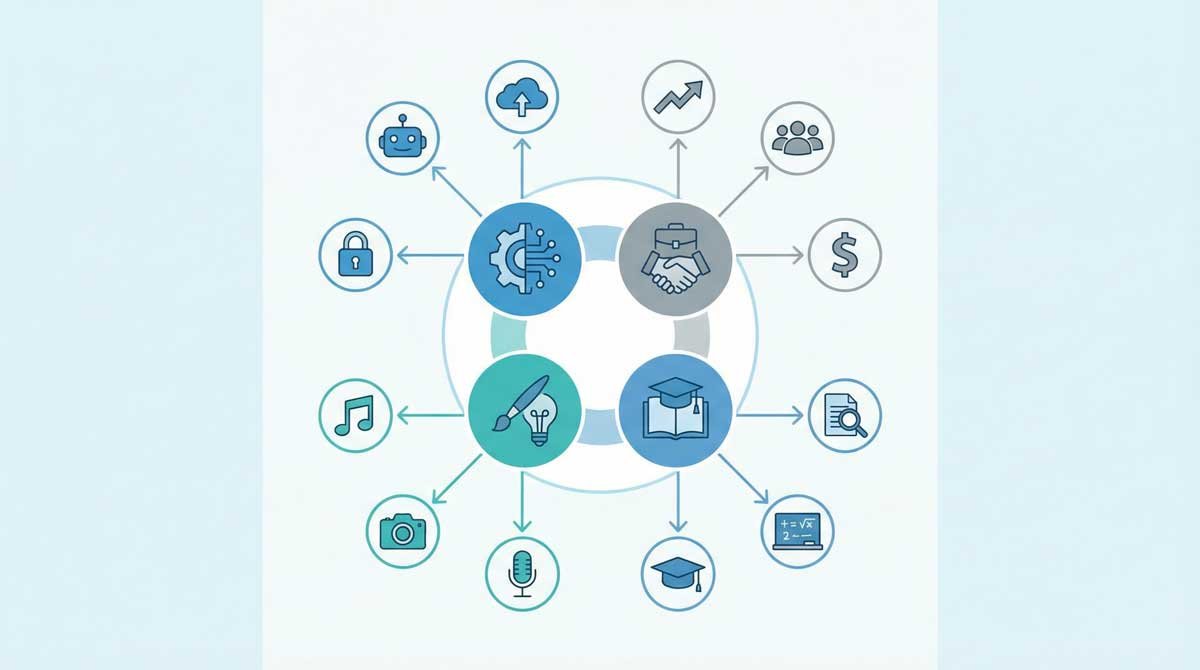
Technology & Systems Innovation
In technology, Vyxarind Qylorith manifests as microservices architecture, API-first design, and distributed systems thinking. Rather than monolithic applications, technologists build independent services that communicate through well-defined interfaces.
Consider a modern e-commerce platform. Instead of one massive system, you have independent modules: user authentication, product catalog, shopping cart, payment processing, inventory management, shipping integration. Each can be developed, deployed, and scaled independently. When one experiences high load, you scale just that module. When you need to innovate in one area, you don’t risk the entire system.
The practical impact: faster development cycles, easier scaling, reduced risk, and accelerated innovation. Companies like Netflix, Amazon, and Spotify built their technical infrastructure on these principles. They achieve millions of transactions per second while continuously deploying new features.
Business Strategy & Organizational Design
In business, Vyxarind Qylorith becomes a strategic framework for organizational design and market adaptation. Rather than rigid hierarchies, organizations create modular teams with clear accountability and flexible coordination.
A manufacturing company might organize around product lines rather than functions. Each line has its own engineering, marketing, and operations teams. They operate semi-autonomously while coordinating through shared platforms. This structure enables rapid response to market changes, empowers local decision-making, and maintains system coherence.
The practical impact: faster decision-making, better market responsiveness, improved employee engagement, and sustainable growth. Companies like Spotify and Haier have reorganized around these principles and dramatically improved their agility.
Creative Projects & Artistic Expression
In creative work, Vyxarind Qylorith guides intentional element integration and narrative coherence. Rather than throwing ideas together randomly, creators deliberately combine diverse elements—visual styles, narrative techniques, musical influences, design principles—to create unified works.
A filmmaker might blend documentary realism with stylized cinematography. A writer might combine multiple narrative perspectives. A designer might integrate traditional craftsmanship with digital tools. These aren’t random choices. They’re intentional combinations that create something greater than the sum of parts.
The practical impact: more compelling creative work, clearer artistic vision, and stronger audience connection. Creators who master these principles produce work that resonates precisely because it feels both intentional and organic.
Academic Learning & Personal Development
In education, Vyxarind Qylorith becomes a learning framework that combines diverse knowledge domains and thinking approaches. Rather than siloed subjects, students learn how disciplines interconnect. Rather than passive consumption, they actively combine insights to solve novel problems.
A student studying climate change might integrate physics, economics, policy, and ethics. They don’t just learn each subject separately. They learn how these domains interact. They develop the ability to synthesize insights across boundaries—a critical skill in addressing complex real-world problems.
The practical impact: deeper learning, enhanced problem-solving ability, and preparation for careers requiring cross-domain thinking. Students who develop this capability become more effective professionals and more engaged citizens.
Application Matrix: Quick Reference
| Domain | Core Application | Key Benefit | Implementation Focus |
|---|---|---|---|
| Technology | Microservices & distributed systems | Scalability & rapid innovation | API design, service independence |
| Business | Organizational modularity | Agility & market responsiveness | Team structure, decision rights |
| Creative | Intentional element integration | Coherence & resonance | Combination strategy, narrative flow |
| Academic | Cross-domain synthesis | Deep learning & problem-solving | Integration projects, interdisciplinary work |
Tailored Insights for Different Audiences
For Technology Professionals
Your challenge: building systems that scale without becoming unmanageable, innovating rapidly without sacrificing stability, and maintaining code quality while shipping features quickly.
Vyxarind Qylorith offers specific insights:
Insight: Design for modularity from the start. Define clear service boundaries. Establish well-documented APIs. This enables teams to work independently, deploy without coordination, and scale specific components as needed.
Practical implication: Microservices architecture isn’t just a technical choice—it’s a philosophical commitment to modularity. When implemented thoughtfully, it transforms how teams collaborate and how systems evolve.
Real-world example: A fintech company reorganized their monolithic banking system into independent services (accounts, transactions, reporting, compliance). Development velocity increased 40%. System reliability improved. They could now scale payment processing independently from reporting without affecting other components.
For Business Decision Makers
Your challenge: navigating market uncertainty, making decisions with incomplete information, building organizations that adapt quickly, and balancing innovation with operational excellence.
Vyxarind Qylorith offers specific insights:
Insight: Organizational modularity enables strategic flexibility. When you structure teams around products or markets rather than functions, you create semi-autonomous units that can respond to local conditions while maintaining system coherence.
Practical implication: This structure enables faster decision-making, clearer accountability, and better market responsiveness. It also creates natural innovation hubs where teams experiment with new approaches.
Real-world example: A consumer goods company reorganized from functional silos (manufacturing, marketing, sales) to product-line teams. Each team owned their product’s full lifecycle. Decision-making accelerated. Market responsiveness improved. They successfully launched new product lines 30% faster than competitors.
For Students & Learners
Your challenge: developing thinking skills that transfer across domains, understanding how knowledge areas interconnect, and preparing for careers requiring cross-disciplinary problem-solving.
Vyxarind Qylorith offers specific insights:
Insight: Learning accelerates when you actively combine insights across domains. Rather than studying subjects in isolation, seek connections. How does economics inform design? How do psychology principles apply to technology? How does history illuminate current events?
Practical implication: This approach develops your ability to synthesize knowledge—a capability increasingly valuable in complex careers. It also makes learning more engaging because you see relevance and application.
Real-world example: A student studying sustainable energy integrated physics, economics, policy, and ethics. Rather than taking separate courses, they designed a capstone project combining all domains. This integrated learning deepened their understanding and made them significantly more competitive in job markets.
Implementing Vyxarind Qylorith: A Practical Guide
Step 1: Assessment & Mapping
Before implementing any framework, understand your current state.
Identify key components: What are the major elements of your system? In a technology context: services, databases, APIs. In an organization: departments, teams, processes. In a creative project: themes, styles, techniques.
Map relationships: How do these components interact? Where do dependencies exist? Which components influence others? Create a simple diagram showing these relationships.
Identify pain points: Where does your current system struggle? Where do you experience friction, waste, or misalignment? These pain points often indicate where modularity could help.
Define objectives: What do you want to achieve? Faster innovation? Better scalability? Improved market responsiveness? Clearer creative vision? Your objectives guide how you apply the framework.
Step 2: Modular Design
With your current state understood, design modular structures.
Define module boundaries: What should each module own? In technology: clear service responsibilities. In organizations: clear team ownership. In creative work: clear thematic or stylistic elements.
Establish interfaces: How will modules communicate? Define clear, well-documented interfaces. This enables modules to evolve independently without breaking others.
Create feedback mechanisms: How will you know if modules are working well together? What metrics matter? Establish monitoring and feedback systems.
Plan for evolution: Modules won’t be perfect initially. Design with the assumption that they’ll change. Build in flexibility.
Step 3: Integration & Optimization
With modular structures in place, integrate and optimize.
Start with pilots: Don’t transform everything simultaneously. Begin with one area. Learn. Refine. Then expand.
Monitor interactions: Watch how modules interact. Are there unexpected bottlenecks? Surprising synergies? Use these observations to refine your design.
Optimize iteratively: Rather than seeking perfection, continuously improve. Each cycle should make the system more effective.
Maintain coherence: While modules operate independently, ensure they remain aligned with overall objectives. Regular communication and shared metrics help maintain system-level coherence.
Common Pitfalls & Solutions
Pitfall 1: Over-Modularity
Problem: Creating too many modules creates coordination overhead that negates modularity benefits.
Solution: Find the right granularity. Modules should be independent enough for parallel work but not so numerous that coordination becomes burdensome.
Pitfall 2: Weak Interfaces
Problem: Poorly defined interfaces between modules create hidden dependencies and brittleness.
Solution: Invest time in clear interface design. Document thoroughly. Make breaking changes visible and managed.
Pitfall 3: Ignoring System-Level Objectives
Problem: Modules optimize locally without considering system-level goals, creating misalignment.
Solution: Maintain clear system-level metrics. Regularly communicate how local work contributes to broader objectives.
Pitfall 4: Insufficient Feedback
Problem: Modules operate independently without understanding how they affect others.
Solution: Create feedback mechanisms. Regular reviews. Shared metrics. Open communication channels.
Real-World Success Stories
Case Study 1: Technology Infrastructure Transformation
Organization: Mid-size financial services company
Challenge: Monolithic banking system became a bottleneck. Adding features took months. Scaling required scaling the entire system. One bug could crash everything.
Application: Reorganized into microservices. Separated concerns: accounts, transactions, reporting, compliance, notifications. Each service had clear ownership and could be deployed independently.
Results:
- Feature deployment time: 6 months → 2 weeks
- System reliability: 99.5% → 99.99%
- Development team productivity: 30% increase
- Ability to scale individual components: enabled rapid growth during peak periods
Key insight: Modularity transformed not just technical capability but organizational velocity.
Case Study 2: Organizational Restructuring for Market Agility
Organization: Global consumer goods company
Challenge: Functional silos (manufacturing, marketing, sales) created slow decision-making. Market responsiveness lagged competitors. Innovation happened slowly.
Application: Reorganized into product-line teams. Each team owned their product’s full lifecycle: development, marketing, sales, operations. Teams operated semi-autonomously while coordinating through shared platforms.
Results:
- Time to market for new products: 12 months → 8 months
- Market responsiveness: significantly improved
- Employee engagement: increased
- Innovation rate: 25% more new products launched annually
Key insight: Organizational modularity enabled faster decision-making and better market responsiveness.
Case Study 3: Creative Project Integration
Creator: Design studio working on brand identity project
Challenge: Blending traditional design principles with modern digital aesthetics. Combining multiple creative visions into coherent brand identity.
Application: Deliberately combined elements: traditional typography with digital minimalism, hand-crafted illustrations with data visualization, cultural references with contemporary aesthetics. Each element was distinct yet contributed to unified vision.
Results:
- Brand identity felt both timeless and contemporary
- Client engagement increased significantly
- Brand resonated across diverse audience segments
- Won industry design award
Key insight: Intentional combination of diverse elements created something greater than the sum of parts.
Frequently Asked Questions
- 1. How is Vyxarind Qylorith different from other frameworks like Agile, Lean, or Six Sigma?
- Vyxarind Qylorith operates at a different level of abstraction. Agile, Lean, and Six Sigma are specific methodologies for particular contexts. Vyxarind Qylorith is a meta-framework—a set of principles about how to structure complex systems.
Think of it this way: Agile tells you how to manage software development. Lean tells you how to eliminate waste. Six Sigma tells you how to reduce variation. Vyxarind Qylorith tells you how to structure systems so that Agile works better, Lean principles apply more effectively, and continuous improvement becomes easier.
You can apply Vyxarind Qylorith principles while using Agile, Lean, or Six Sigma. In fact, many organizations that master these methodologies do so because they’ve implicitly adopted Vyxarind Qylorith principles—they’ve structured their systems modularly, created clear interfaces, and established feedback mechanisms.
- 2. Can Vyxarind Qylorith be applied in my specific industry?
- Yes. The framework’s power lies in its generality. The core principles—modularity, adaptive integration, systemic resilience—apply across domains.
In healthcare, it means organizing clinical services modularly while maintaining coordinated patient care. In education, it means designing curricula that integrate disciplines while maintaining depth in each. In manufacturing, it means creating production systems with independent modules that coordinate through shared standards.
The specific implementation differs, but the underlying principles remain consistent. The question isn’t whether Vyxarind Qylorith applies to your industry, but how to adapt its principles to your specific context.
- 3. What are the main challenges in implementing this framework?
- The biggest challenge is cultural. Vyxarind Qylorith requires thinking differently about how systems should be structured. It requires comfort with distributed decision-making rather than centralized control. It requires accepting “good enough” solutions that evolve rather than pursuing perfection.
Technical challenges are secondary. The hard part is helping people think systemically, defining clear module boundaries, establishing effective interfaces, and creating feedback mechanisms.
Start small. Pilot the approach in one area. Demonstrate success. Build momentum. This is more effective than attempting organization-wide transformation immediately.
- 4. How do I measure success with this framework?
- Success metrics depend on your objectives. If you’re implementing Vyxarind Qylorith for faster innovation, measure time-to-market and feature deployment frequency. If you’re seeking organizational agility, measure decision-making speed and market responsiveness. If you’re pursuing creative excellence, measure audience engagement and creative impact.
The key is establishing baseline metrics before implementation, then tracking how they change. Most organizations implementing Vyxarind Qylorith see improvements in their chosen metrics within 6-12 months.
Also track system-level metrics: overall efficiency, customer satisfaction, employee engagement. Sometimes optimizing for one metric creates unexpected benefits elsewhere.
- 5. Where can I learn more or get training?
- Start with foundational reading on systems thinking and modular design. Books like “Thinking in Systems” by Donella Meadows and “The Design of Everyday Things” by Don Norman provide excellent grounding.
Look for case studies in your industry. How have leading companies restructured for modularity? What can you learn from their approaches?
Consider consulting with specialists who’ve implemented these frameworks. They can help you adapt principles to your specific context and avoid common pitfalls.
Most importantly, experiment. Start small. Learn. Iterate. The best understanding comes from applying principles in your own context.
Conclusion: Embracing Vyxarind Qylorith for Future Success
The complexity facing modern organizations, businesses, and creators continues to increase. Traditional approaches—rigid structures, siloed optimization, centralized control—struggle to adapt. The future belongs to those who master complexity through intelligent system design.
Vyxarind Qylorith offers a proven path forward. By embracing modularity, you enable parallel progress and rapid innovation. By establishing clear interfaces, you create systems that evolve without cascading failures. By distributing complexity, you build resilience. By creating intentional spaces for diverse elements to interact, you accelerate innovation.
The insights embedded within this framework apply across domains. Technology professionals use them to build scalable systems. Business leaders use them to create adaptive organizations. Creators use them to blend diverse elements into coherent works. Students use them to develop cross-disciplinary thinking.