For years, glossy white kitchens dominated Pinterest boards and home magazines; the epitome of minimalist chic, suggests Williamsburg Property Management Company. Crisp cabinetry, sleek countertops, and streamlined design promised calm and sophistication. Yet, after a decade of this pristine perfection, something has shifted. Homeowners are craving warmth, individuality, and flair. Enter kitchen maximalism: a vibrant rebellion against the sterile and predictable.
This trend celebrates creativity over conformity. It’s about colour, texture, and storytelling; designing a kitchen that feels alive, layered, and unapologetically personal. But why has this shift happened, and how can a maximalist approach be brought to life without crossing into chaos?
Table of Contents
ToggleThe Rise of Kitchen Maximalism
Maximalism has been quietly brewing for a while, fuelled by the desire for spaces that reflect personality rather than perfection. As open-plan living became the norm, kitchens turned from purely functional spaces into social hubs: somewhere to cook, eat, work, and gather. The all-white aesthetic began to feel too clinical, especially in homes where warmth and comfort took priority.
Influences from social media and design movements like Grandmillennial style and eclectic modernism have also played a part. People are rediscovering joy in mixing vintage with contemporary, luxury with DIY, and bold with subtle. Maximalism, at its best, is less about excess and more about balance; combining diverse elements in a way that feels curated rather than cluttered.
Colour Makes a Comeback
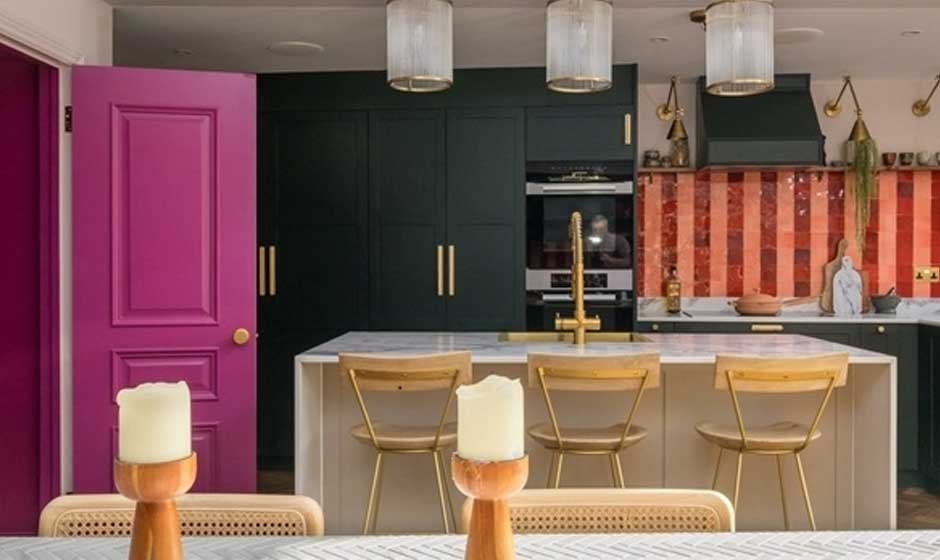
The easiest way to embrace maximalism is through colour. Deep forest greens, navy blues, and rich terracottas have replaced the stark white and grey palettes of years past. These shades create instant warmth, making the kitchen feel more inviting. For those unsure about fully committing, colourful cabinetry or a vibrant backsplash can add personality without overwhelming the space.
Flooring plays a quiet yet crucial role here: patterned tiles, dark wood, or terrazzo can ground bold colours beautifully, creating cohesion amid contrast. Even rugs under dining nooks or kitchen islands have become common additions, softening the look while enhancing comfort.
Texture, Pattern, and Playfulness
A maximalist kitchen thrives on texture and pattern. Think marble countertops with veined drama, fluted wood panels, brass fittings, and handmade ceramic tiles. Patterned wallpaper or decorative wall panelling can add depth and character to areas like breakfast corners or pantry walls.
Open shelving has also become a key feature, displaying colourful crockery, cookbooks, and vintage finds. The goal is to tell a story: each object contributing to the room’s narrative. Layering textures, from a rattan pendant light to parquet flooring and linen curtains, keeps the space visually engaging.
The charm lies in imperfection: slightly mismatched handles, a mix of matte and gloss finishes, or even a statement piece of furniture like a reclaimed dresser repurposed as a kitchen island.
Why Maximalism Feels Right
Psychologically, maximalist design resonates because it reflects comfort, nostalgia, and self-expression; all things people have sought more in recent years. After a long spell of neutral minimalism, many are ready for something more joyful. A colourful, character-filled kitchen can feel energising in the morning and cosy at night, offering a sensory experience rather than just a functional space.
There’s also a sustainability angle. Instead of gutting a kitchen to chase trends, maximalism encourages keeping and updating what already exists. Vintage tiles, refurbished cabinets, and upcycled furniture fit seamlessly into this aesthetic. It’s a design philosophy that welcomes imperfection and celebrates creativity.
Bringing Maximalism Home
To incorporate the look without overwhelm, start small. Introduce patterned textiles, colourful bar stools, or statement lighting. Swap plain cabinet handles for brass or ceramic ones, and mix materials like wood, marble, and metal for a layered effect. If walls are neutral, add vibrancy through accessories. Think bold artwork, vibrant glassware, or a patterned rug that ties the room together.
Balance remains key. A maximalist kitchen shouldn’t feel chaotic, just expressive. The best spaces combine variety with harmony; where colours complement rather than compete, and where personal touches take centre stage.
Is It Worth the Hype?
For anyone tired of sterile minimalism, kitchen maximalism offers a refreshing alternative. It’s a celebration of individuality, craftsmanship, and comfort; a reminder that design can be both functional and joyful. While an all-white kitchen may never truly go out of style, bold design choices add warmth, character, and soul.
In the end, a maximalist kitchen isn’t about showing off: it’s about showing personality. And that, perhaps, is the most timeless trend of all.