Martin Mull, a man of many talents, left behind a significant legacy in comedy, art, and music. Following his passing in June 2024, many have wondered about the financial success he achieved over a career spanning more than five decades. At the time of his death, Martin Mull’s net worth was estimated to be around $8 million.
This figure reflects a lifetime of creative work, not just as a familiar face on screen, but as a respected painter, a sardonic musician, and a clever writer. His wealth was not the result of a single blockbuster role, but rather a slow and steady accumulation from a variety of artistic pursuits.
Table of Contents
ToggleEarly Life and Artistic Beginnings
Born Martin Eugene Mull on August 18, 1943, in Chicago, Illinois, his upbringing was shaped by a creative and technical household. His mother, Betty, was an actress and director, while his father, Harold, was an acoustics engineer. This blend of art and science was a telling backdrop for the multifaceted career he would later build.
The family moved to North Ridgeville, Ohio, when Mull was two, and later to New Canaan, Connecticut, during his teenage years. It was clear from early on that his primary passion was art. He pursued this interest with formal training, earning both a Bachelor and a Master of Fine Arts in painting from the prestigious Rhode Island School of Design.
This academic foundation in the arts would remain a core part of his identity throughout his life, even as he gained fame in other fields.
A Career Takes Flight: From Music to Television
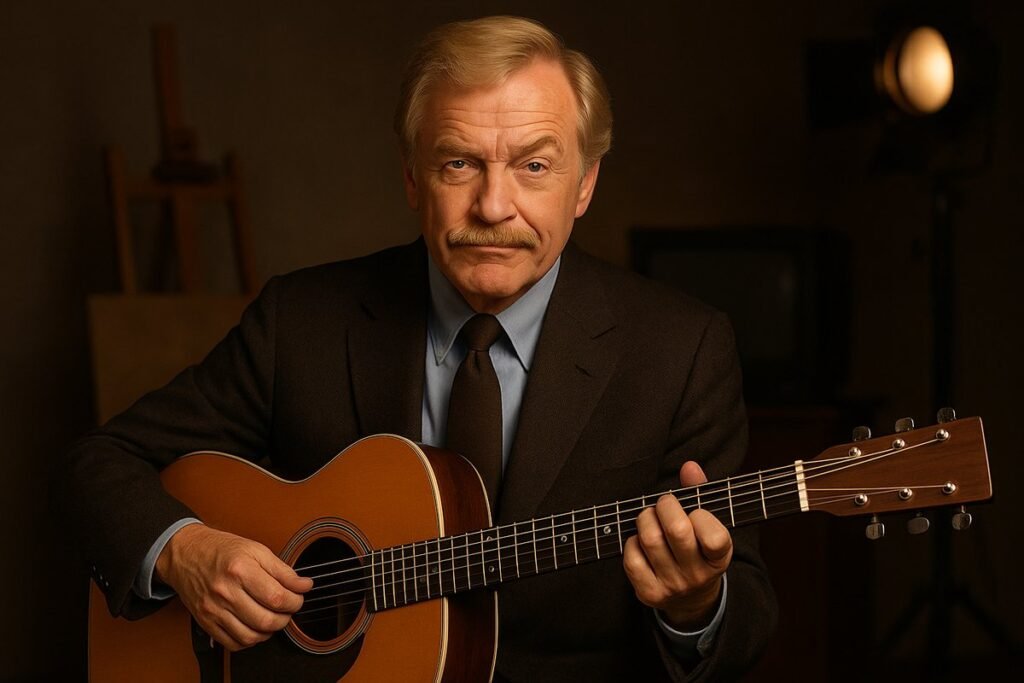
Before he was a household name in acting, Martin Mull first made his mark in the music world. With a guitar in hand and a satirical wit, he wrote and performed comical songs that set him apart. He penned the country tune “A Girl Named Johnny Cash” for singer Jane Morgan and released several of his own albums, including the cleverly titled “Martin Mull and His Fabulous Furniture in Your Living Room!”
His musical comedy act led him to open for major artists like Frank Zappa and Bruce Springsteen, but it was television that would make him a star. His big break came with Norman Lear’s groundbreaking parody soap opera, “Mary Hartman, Mary Hartman.” Mull played the hilariously despicable Garth Gimble, a character who met a memorable end by being impaled on an aluminum Christmas tree.
Lear was so impressed with Mull’s talent that he created a spin-off talk show, “Fernwood 2 Night,” for him. In it, Mull played Barth Gimble, Garth’s equally smarmy twin brother. The show, which relied heavily on improvisation with co-star Fred Willard, was a precursor to modern comedies like “Curb Your Enthusiasm” and “The Larry Sanders Show.”
A Familiar Face on the Small Screen
Throughout the 1980s and 1990s, Martin Mull became one of television’s most recognizable character actors. His deadpan delivery and signature mustache made him a perfect fit for a wide range of comedic roles. He had a memorable recurring part as Leon Carp, Roseanne Barr’s gay boss on the hit sitcom “Roseanne,” a role that was considered progressive for its time.
He followed this with another long-running role as Principal Willard Kraft on “Sabrina the Teenage Witch,” where he served as a constant foil to the magical antics of the main characters. His ability to play the straight man in absurd situations made him a valuable asset to any cast.
Later in his career, he continued to appear in popular shows, including a recurring role as a pharmacist on “Two and a Half Men” and as a private detective on “Arrested Development.” His work was critically recognized with a Primetime Emmy nomination for his guest performance as political operative Bob Bradley on the acclaimed HBO series “Veep.”
Success on the Big Screen
Martin Mull also carved out a successful career in film, often appearing in supporting roles that left a lasting impression. One of his most beloved performances was as the stuffy Colonel Mustard in the 1985 cult classic “Clue.” The film, based on the popular board game, showcased his comedic timing and ability to play off a talented ensemble cast.
He also appeared in major box office hits, including the 1993 comedy “Mrs. Doubtfire,” where he shared the screen with Robin Williams and Sally Field. The film was a massive success, earning over $440 million worldwide. A few years later, he played a memorable role as the stressed-out neighbor to Arnold Schwarzenegger in the holiday comedy “Jingle All the Way.”
His filmography demonstrates his versatility, with roles in everything from the horror-comedy “Cutting Class” to the family film “101 Dalmatians.” While he was rarely the leading man, his presence in a film always added a layer of humor and reliability.
The Painter and His Passion
While many knew him for his acting, Martin Mull’s first love was painting. He was a dedicated and serious artist throughout his life, having earned a Master of Fine Arts from the Rhode Island School of Design. His work, often described as a blend of photorealism and pop art, was exhibited in galleries across the country.
His first major solo exhibition was held in 1980, and he continued to produce and show his work for decades. He even published a book of his art titled “Paintings Drawings and Words” in 1995. His paintings were not just a hobby; they were a legitimate and respected part of his career.
His art even found its way into other creative mediums. A painting by Mull was featured on the cover of a Joyce Carol Oates novel, and another piece, owned by fellow actor and art collector Steve Martin, was used as the cover for an album by Martin and Edie Brickell. This crossover success highlights the high regard in which his artistic talents were held.
How Martin Mull Built His Wealth
Martin Mull’s $8 million net worth was the result of a diversified career that spanned multiple creative industries. Unlike celebrities who earn their fortune from a single blockbuster franchise or a mega-hit album, Mull’s wealth was built through consistent work over five decades.
His primary source of income was his extensive work in television and film. Decades of recurring roles on successful sitcoms, guest appearances, and film parts provided a steady stream of revenue. While these roles didn’t always come with a superstar salary, their sheer volume added up over time.
His music career also contributed to his earnings, with album sales and royalties from his songwriting providing an additional income stream. Furthermore, his career as a painter was not just a passion project but a profitable one. His artwork was sold in galleries, with some individual pieces fetching tens of thousands of dollars, adding a significant and unique dimension to his financial portfolio.
Personal Life and Legacy
Away from the camera, Martin Mull was a family man. He was married to singer Wendy Haas for over four decades, and together they had a daughter, Maggie. His daughter has followed in his entertainment footsteps, working as a producer for the animated series “Family Guy.”
His legacy is that of a true renaissance man of entertainment. He was a pioneer in the mockumentary and talk show parody formats, influencing a generation of comedians who came after him. His unique ability to blend dry wit with genuine artistic talent made him a respected figure in multiple fields.
Whether he was making audiences laugh on screen, creating thought-provoking art, or writing a satirical song, Martin Mull left an indelible mark on American culture. He proved that an artist could find success and fulfillment in many different forms of expression.
Final Years
In his later years, Martin Mull continued to work, taking on roles in shows like “The Cool Kids” and “Brooklyn Nine-Nine.” He remained creatively active, never straying far from the artistic pursuits that defined his life. He passed away on June 27, 2024, at the age of 80, after a long illness, leaving behind a rich and varied body of work that continues to be celebrated.
His life serves as a testament to the rewards of a career driven by curiosity and a genuine love for the arts. From the television screen to the art gallery, Martin Mull’s creative spirit was a constant source of entertainment and inspiration.